
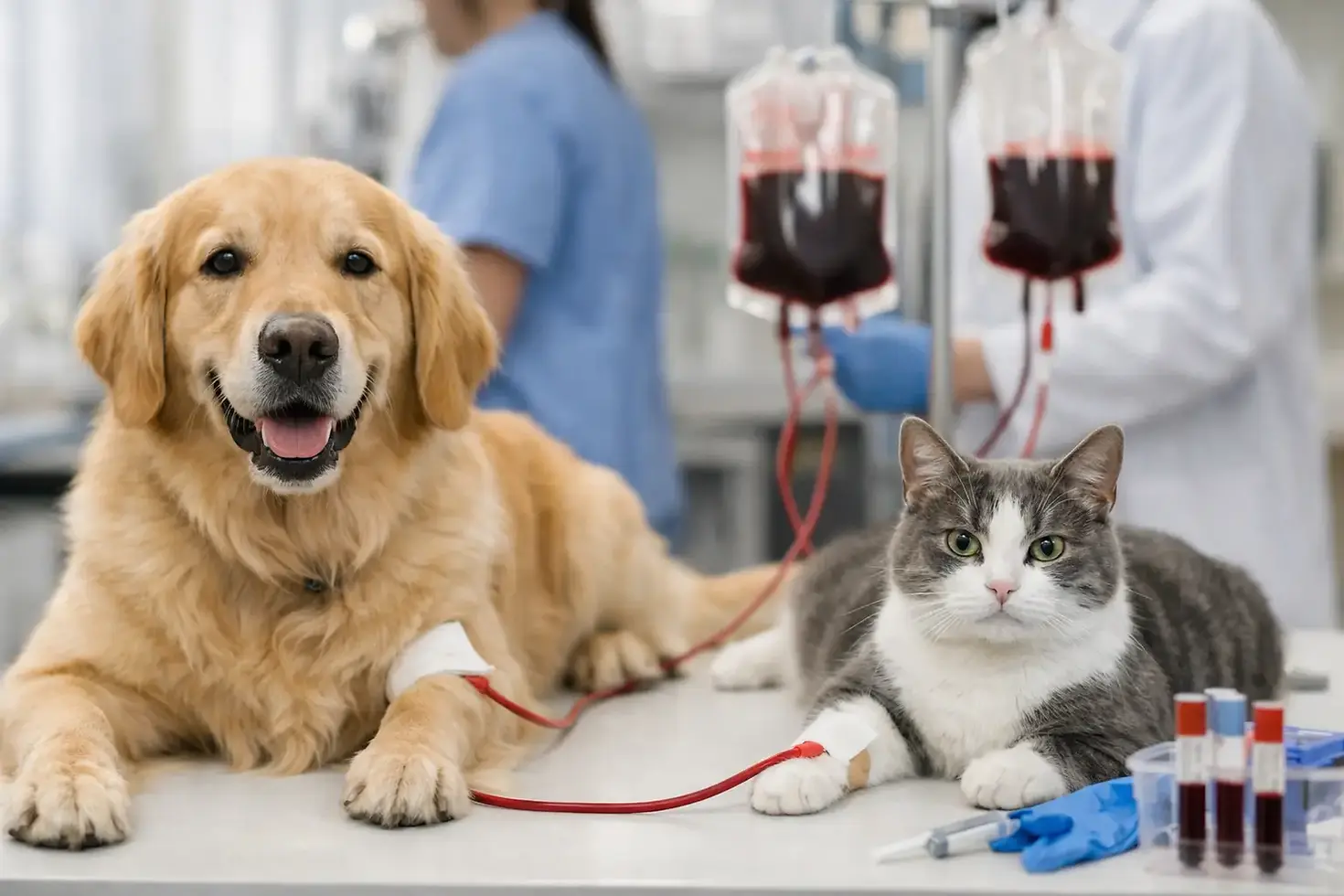
Pet Blood Bank Donation for Dogs and Cats
- Vet Nurse Emily
- 23 hours ago
- 6 min read
A dog hit by a car, a cat with sudden internal bleeding, a pet in surgery after a serious illness - when minutes matter, access to blood can make the difference between stabilising a patient and losing them. That is why pet blood bank donation plays such an important role in modern veterinary care. For many pet owners, it is something they only hear about during a crisis. In practice, it relies on healthy donor pets being ready well before an emergency begins.
At a hospital level, blood products support a wide range of patients. Trauma cases often need urgent transfusions, but so do pets with clotting disorders, severe anaemia, immune-mediated disease, surgical blood loss and some toxin exposures. Having a reliable donor program helps veterinary teams respond quickly and safely, especially in emergency and critical care settings where delays can change the outcome.
What pet blood bank donation actually means
Pet blood bank donation is the veterinary equivalent of blood donation in people. A healthy dog or cat gives a carefully measured amount of blood, which can then be used to help another animal in need. In some cases, that blood is transfused as whole blood. In others, it is separated into components so different parts can be used for different medical problems.
That matters because not every patient needs the same support. One dog may need red blood cells to carry oxygen after major blood loss. Another may need plasma for clotting support. A well-run blood bank allows the clinical team to match the product to the problem rather than taking a one-size-fits-all approach.
From the pet owner’s side, donation is usually straightforward. Donor pets are screened first to make sure they are suitable and healthy. The donation itself is done by trained veterinary staff in a controlled setting, with close monitoring before, during and after the collection.
Why donor pets are needed
Unlike many human hospitals, veterinary hospitals cannot rely on a large public blood supply. Demand can also be unpredictable. A quiet morning can shift quickly with an emergency surgery, a snake bite case, a dog with haemorrhage, or a cat presenting in shock. Blood cannot be manufactured, and some products have limited storage life, so donor availability matters.
This is one of the trade-offs in veterinary medicine. Hospitals want blood products on hand for urgent cases, but they also need donor programs that are safe, ethical and sustainable. That means selecting suitable donor animals, screening them carefully and collecting only when appropriate. It also means being realistic about local needs. A 24/7 emergency hospital will often see a different level of demand from a clinic focused only on routine appointments.
For pet owners, the value is simple. Donor pets help create a safety net for the wider animal community. A healthy dog or cat may never need a transfusion themselves, but their donation could be the reason another family gets more time with their pet.
Which pets can take part in pet blood bank donation?
Eligibility varies between hospitals and blood banks, but donor pets are usually calm, healthy adults with a suitable body weight and no history of major illness. They also need to be up to date with preventive care and able to cope well with handling. Temperament matters as much as size. A relaxed pet is safer and more comfortable during the process.
Dogs are often easier candidates because they can usually donate a useful volume of blood and many tolerate the procedure very well. Cats can also donate, but the process can be more selective due to their smaller size, stress sensitivity and blood type considerations.
There are also medical checks behind the scenes. Donor pets are generally screened for infectious diseases and assessed for their blood type where relevant. The team will look at age, body condition, behaviour and overall health before deciding whether donation is appropriate. If a pet is nervous, too small, medically unsuitable or simply not comfortable, the answer may be no - and that is the right call.
What happens during a donation appointment?
The process is designed to be calm, controlled and low stress. Before collection, the veterinary team performs an examination and may run blood tests to confirm the pet is fit to donate. This protects both the donor and the patient who may later receive the blood.
For dogs, blood is commonly collected from the jugular vein in the neck because it allows an efficient draw with minimal discomfort. Cats may require a more tailored approach, and some centres use sedation depending on the individual animal and collection protocol. The amount taken is carefully calculated according to the pet’s size and health status.
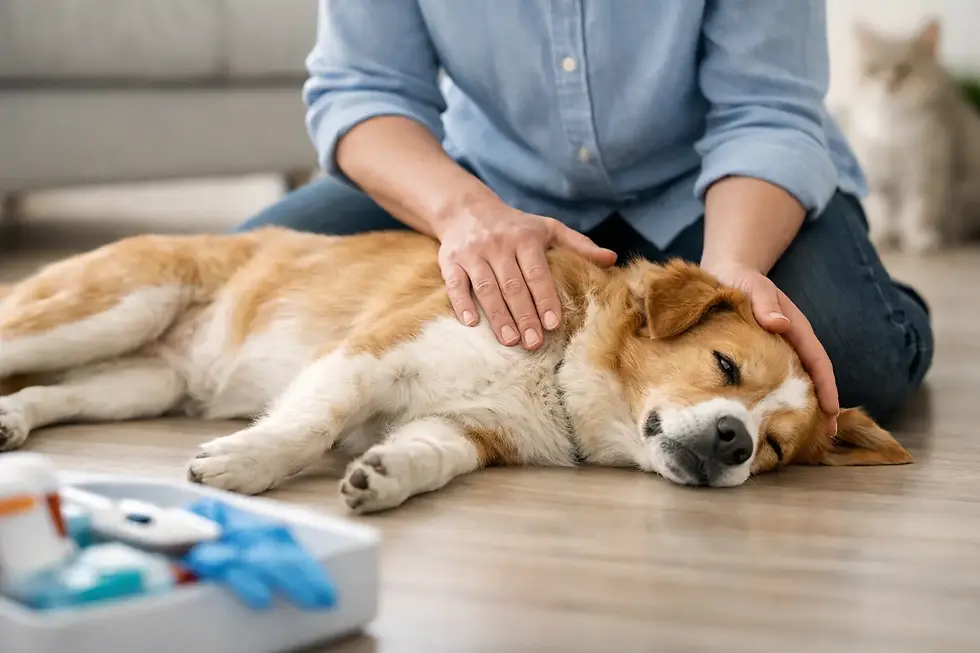
Most donor pets recover quickly after a short rest, some monitoring and a snack. Owners are usually advised to keep things quiet for the remainder of the day and watch for any concerns, although complications are uncommon when donor selection and handling are done properly.
This is one area where experience really counts. A trained team, clear protocols and access to in-house diagnostics all help reduce risk and make the process smoother for donor pets and their owners.
The role of blood typing and compatibility
Transfusions are not as simple as giving any available blood to any patient. Dogs and cats have different blood groups, and mismatched transfusions can cause serious reactions. That is why blood typing and crossmatching are so important.
In dogs, there are several recognised blood groups, and compatibility planning becomes especially important if a patient has had a previous transfusion. Cats have a different blood group system and naturally occurring antibodies, which means matching is critical from the first transfusion. A mismatch in a cat can be particularly dangerous.
For owners, the key point is reassurance. When a veterinary hospital talks about donor screening, typing and compatibility testing, that is not administrative padding. It is essential clinical work that protects the recipient and helps improve the chances of a successful transfusion.
Is pet blood bank donation safe for the donor?
For suitable animals, donation is generally very safe. The biggest factor is proper selection. A healthy pet with the right temperament, weight and screening results is far more likely to tolerate donation well than a pet who only just meets the criteria.
That said, no medical procedure is completely without risk. Some pets may feel tired afterwards. A small bruise at the collection site can occur. Stress is also a real consideration, particularly for cats or anxious dogs. This is why a careful, case-by-case approach matters. Not every pet should donate, and not every willing owner will be advised to proceed.
A good donor program will always put the donor’s welfare first. If there is any concern about underlying disease, behavioural stress, poor body condition or recovery, the team should pause or decline donation. That is not a failure of the program. It is part of running it responsibly.
Why this matters in emergency care
In emergency and critical care, timing shapes treatment decisions. If a patient arrives collapsed with severe blood loss, the team may need to stabilise circulation, identify the source of the problem, run imaging, prepare for surgery and arrange transfusion support all at once. Access to blood products can buy time for diagnosis and treatment.
It also supports more advanced care. Patients with complex medical conditions may need repeated transfusions or specific blood components over time. Without donor animals, those options become limited very quickly.
This is where an integrated hospital model makes a practical difference. Emergency clinicians, surgery, imaging, inpatient monitoring and blood bank capability all support one another. For families facing a frightening situation, that coordination can reduce delays at the very moment their pet needs decisive care.
In New South Wales communities where pet owners expect both routine support and urgent help, awareness matters. Pet blood bank donation is not just a niche service tucked behind the scenes. It is part of the infrastructure that allows hospitals such as VECA to respond when a dog or cat needs life-saving treatment without warning.
If you think your pet may be suitable as a donor, the next step is a conversation with your veterinary team. They can explain the criteria, the screening process and whether donation is a good fit for your animal. Sometimes the answer is yes, sometimes it is no, and sometimes it is worth revisiting later. Either way, asking the question is a practical act of care - for your own pet, and for another family’s when they need it most.


Comments