
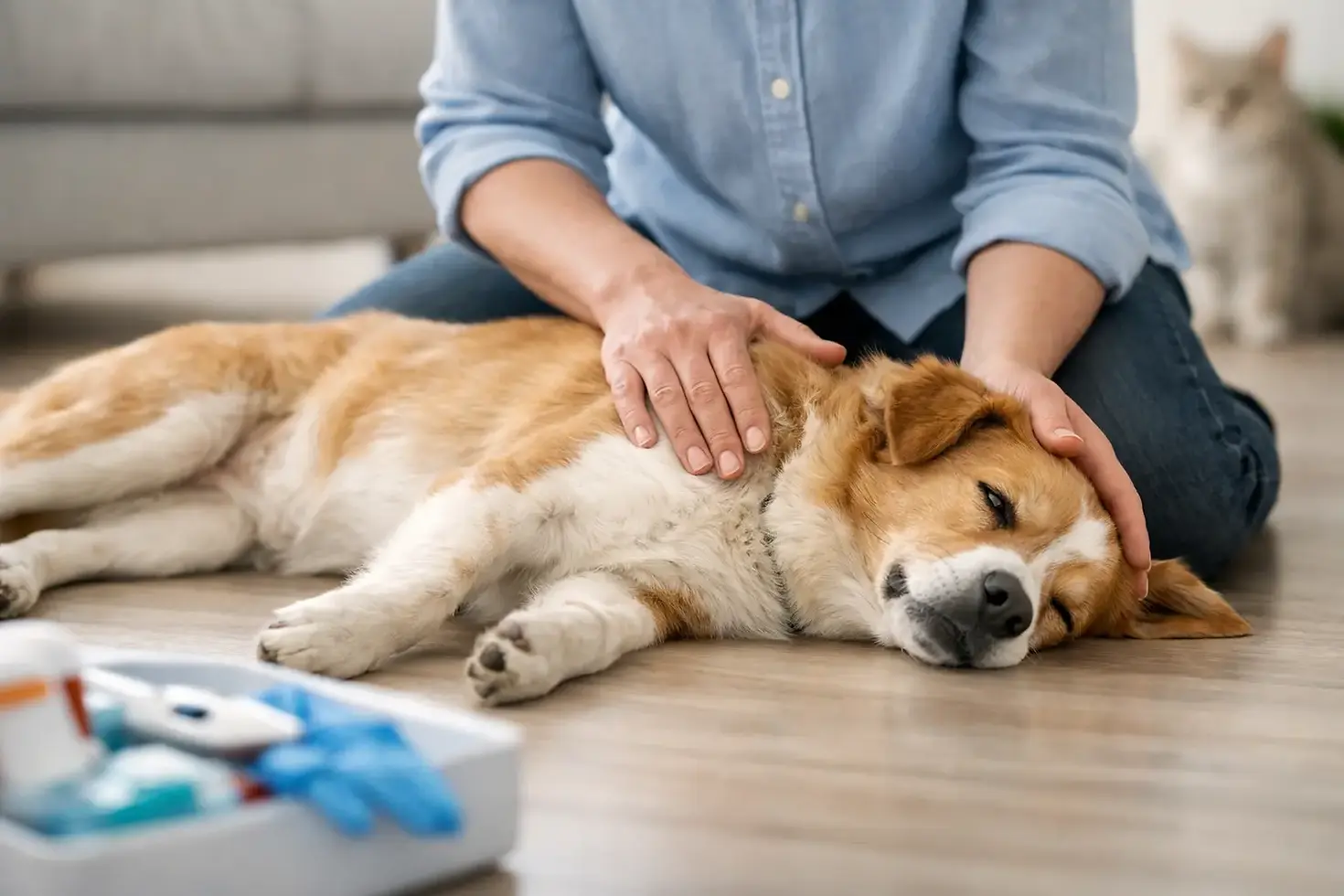
How to Manage a Pet Seizure Safely
- Vet Nurse Emily
- 23 hours ago
- 6 min read
A seizure is one of the most frightening things a pet owner can witness. One moment your dog or cat may seem normal, and the next they may collapse, paddle their legs, drool, stiffen, or lose awareness. If you are searching for how to manage a pet seizure, the most important thing to know is this: stay calm, keep your pet safe from injury, and get veterinary advice as soon as possible.
Seizures can happen for many reasons, from epilepsy to toxin exposure, head trauma, liver disease, low blood sugar, or other serious medical problems. Some pets recover quickly after a single episode. Others need urgent assessment, hospital care, or ongoing medication. Your response in the first few minutes matters.
How to manage a pet seizure in the moment
During a seizure, your pet is not in control of their body. They may appear unconscious, disoriented, rigid, or jerking. It can look painful and distressing, but your focus should be on safety rather than trying to stop the seizure yourself.
Move nearby objects out of the way so your pet does not hit furniture, stairs, sharp edges, heaters, or anything else that could cause injury. If they are close to steps or a ledge, block access carefully without putting your hands near their mouth. Do not try to hold them down. Restraining a seizuring animal can increase the risk of injury to both of you.
Do not put your hand in your pet's mouth. Pets do not swallow their tongue during a seizure, and trying to open the mouth can lead to a serious bite, even in a normally gentle animal.
If possible, reduce stimulation in the room. Dim the lights, lower noise, and keep children and other pets away. A quiet environment can help while the seizure runs its course.
It is also important to time the episode. This can be harder than it sounds because even 30 seconds may feel much longer in a crisis. Use your mobile if you can. The length of the seizure helps your veterinarian assess urgency and guide treatment.
If it is safe to do so, record a short video. This is often extremely helpful because many pets appear normal by the time they arrive at the clinic, and seizure-like events can sometimes be confused with fainting, tremors, vestibular episodes, or collapse.
What not to do
When people panic, they often rush to comfort their pet in ways that are understandable but unsafe. Avoid offering food, water, or medication during an active seizure. Your pet may not be able to swallow properly and could choke or inhale fluid.
Do not attempt home remedies or wait for repeated episodes before taking the situation seriously. A single seizure may still need investigation, particularly in older pets, very young pets, or animals with no previous history.
It is also best not to assume every seizure is epilepsy. Epilepsy is one possible cause, but there are many others, and some require urgent treatment.
What happens after the seizure
Once the seizure stops, many pets enter what is called the post-ictal phase. This is the recovery period, and it can last minutes to hours. Your pet may pace, seem blind, stumble, drool, vocalise, appear very hungry, or fail to recognise familiar people or spaces. This can be alarming, but it is common after a seizure.
Keep your pet in a safe, quiet area and speak gently. Give them space if they seem confused or reactive. Even affectionate pets may behave unpredictably while recovering.
Check for injuries such as bleeding, swelling, limping, or trauma to the face. If your pet feels very hot, avoid drastic cooling measures and contact a veterinarian for advice. Overheating can happen during prolonged seizures, but aggressive home cooling is not always the right response.
Once your pet is able to swallow normally and is fully aware, small amounts of water may be offered. Food can usually wait until they are more settled, unless your veterinarian advises otherwise.
When a seizure is an emergency
Some seizures require immediate emergency care. You should seek urgent veterinary attention if the seizure lasts longer than five minutes, if your pet has more than one seizure in 24 hours, or if they have repeated seizures without fully recovering in between. This pattern can quickly become life-threatening.
A first-ever seizure should also be assessed promptly, especially in older pets. Dogs and cats that have eaten something toxic, suffered trauma, are pregnant, diabetic, known to have heart or liver disease, or are already unwell need urgent evaluation.
Even if the seizure was brief and your pet seems better afterwards, it is sensible to contact a veterinary team for advice. It depends on your pet's age, medical history, medications, and how the episode looked. In some cases, monitoring at home is reasonable for a short time. In others, blood tests, imaging, hospitalisation, or referral-level care may be needed without delay.
How to get your pet to the vet safely
Transport matters, particularly if your pet is still disoriented. Keep the car quiet and cool. For dogs, use a flat surface, bedding, or a stretcher-style support if they are weak or unable to walk safely. For cats, a secure carrier lined with towels is usually safest.
Bring any video footage you captured and note the time the seizure started and stopped. Also note what your pet was doing beforehand, whether there was exposure to toxins or unusual food, and whether this has happened before. If your pet is on medication, bring the names and doses with you.
If your pet has another seizure in the car, do not attempt to treat it while driving. Pull over safely and call the clinic for guidance.
Why seizures happen
Seizures are a symptom, not a diagnosis. In some pets, especially younger adult dogs, epilepsy may be the most likely explanation once other causes are ruled out. In others, the cause may be outside the brain, such as a metabolic or toxic problem, or inside the brain, such as inflammation, bleeding, a tumour, or structural disease.
That is why veterinary assessment matters even when a pet seems back to normal. A seizure can be the first visible sign of a significant health issue. Early investigation can make a real difference to treatment options and outcomes.
What your veterinarian may do
The next steps depend on your pet's condition. Your veterinarian may recommend a physical examination, neurological assessment, blood and urine testing, blood pressure checks, and in some cases advanced imaging such as CT or MRI. Hospital care may be needed if seizures are prolonged, recurring, or linked to serious illness.
Treatment also depends on the cause. Some pets need anti-seizure medication. Others need treatment for toxin exposure, low blood sugar, liver disease, infection, or another underlying condition. There is no one-size-fits-all plan, which is why trying to manage recurring seizures without veterinary input can be risky.
For pets diagnosed with epilepsy, long-term management often includes regular medication, monitoring, and follow-up blood tests. Good control is possible for many animals, but treatment needs to be tailored carefully.
Living with a pet that has seizures
If your pet has had one seizure or has been diagnosed with a seizure disorder, keeping a diary is one of the most useful things you can do. Record the date, time, length of the episode, what the seizure looked like, how your pet behaved afterwards, and any possible triggers. Patterns are not always obvious at first, but they can help guide treatment decisions.
It is also worth reviewing your home for hazards. Pets with seizure disorders are safer when access to pools, stairs, balconies, fireplaces, and unstable furniture is controlled. This does not mean your pet cannot enjoy a happy life. It means planning ahead so a future episode is less likely to result in secondary injury.
If your veterinarian prescribes medication, give it exactly as directed. Do not stop treatment suddenly unless specifically advised. Missed doses can increase seizure risk, and sudden withdrawal can be dangerous.
Families often worry they will not cope if another seizure happens. In reality, most people feel more confident once they know what to do. The key is not to be perfect. It is to stay calm enough to protect your pet, observe what happened, and seek the right care promptly.
At VECA, we regularly support families through urgent neurological events as well as the follow-up care that can come afterwards. If your pet has a seizure, trust what you are seeing and act early. Fast, calm action gives your pet the best chance of safe recovery and the right treatment from the start.
If you ever feel unsure, treat a seizure as a reason to call. It is always better to ask the question while your pet still has time on their side.


Comments