
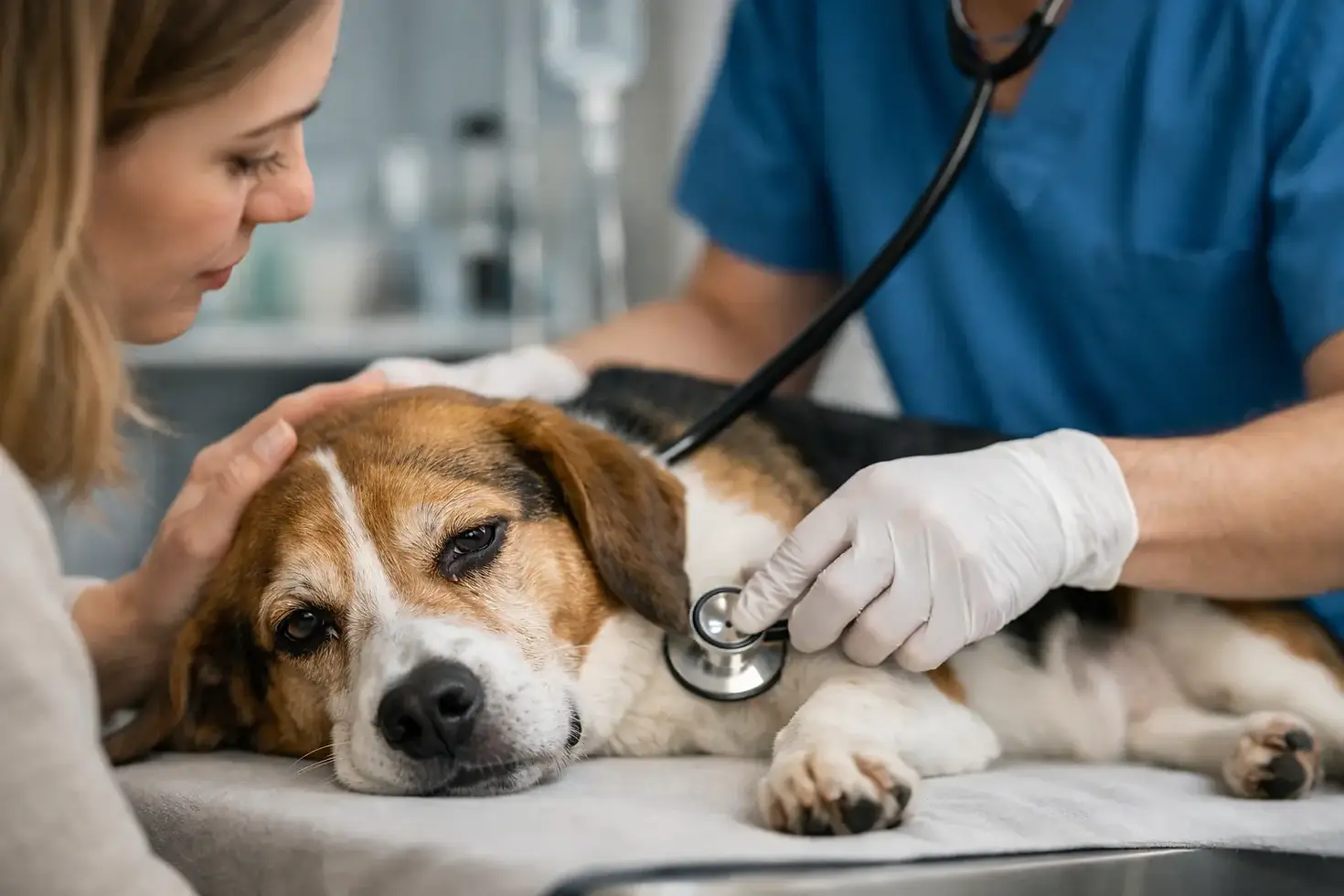
11 signs my dog needs urgent vet care
- Vet Nurse Emily
- 23 hours ago
- 6 min read
It is usually obvious when your dog is having a great day. You know their normal appetite, energy, breathing, gait and behaviour. That is exactly why the signs my dog needs urgent vet care often stand out fast - even if you cannot immediately name what is wrong.
When something feels off, trust that instinct and look for the big red flags. Some problems can wait for a routine appointment. Others need immediate assessment because minutes matter, especially with breathing issues, collapse, severe bleeding, poisoning, bloat or neurological changes. Knowing the difference can help you act quickly and give your dog the best chance of a good outcome.
Signs my dog needs urgent vet care right now
Urgent care is about risk, not just discomfort. A dog does not need to be crying or visibly injured for the situation to be serious. Some of the most dangerous conditions start with subtle changes, then worsen quickly.
Trouble breathing
If your dog is struggling to breathe, breathing with effort, making unusual respiratory noises, standing with their neck stretched out, or showing blue, grey or very pale gums, that is an emergency. Fast or laboured breathing can be linked to heart disease, severe allergic reactions, heat stress, airway obstruction, chest problems or serious pain.
Dogs can compensate for a while, then deteriorate suddenly. Keep them calm, avoid exercise, and seek immediate veterinary attention.
Collapse, fainting or extreme weakness
A dog that collapses, cannot stand, seems disoriented, or suddenly becomes very weak needs urgent assessment. This may be caused by internal bleeding, heart disease, severe infection, toxin exposure, low blood sugar, heatstroke or trauma.
Even if your dog seems to recover after a brief episode, do not assume the danger has passed. Collapse is a symptom worth taking seriously every time.
Repeated vomiting or severe diarrhoea
One isolated vomit in an otherwise bright dog may not always be an emergency. Repeated vomiting, vomiting with lethargy, inability to keep water down, blood in vomit, black stools, or severe diarrhoea is different. Puppies, elderly dogs and dogs with existing medical conditions can become dangerously dehydrated much faster than owners expect.
There is also the question of what is causing it. Gastroenteritis may be manageable, but bowel obstruction, pancreatitis, toxin ingestion or haemorrhagic diarrhoea syndrome can become serious very quickly.
A swollen abdomen or unproductive retching
If your dog’s abdomen suddenly looks distended and they are trying to vomit without bringing anything up, pacing, drooling, restless or distressed, think emergency. These are classic warning signs of gastric dilatation and volvulus, often called bloat.
Bloat can cut off blood supply and progress rapidly. Large, deep-chested breeds are at higher risk, but any dog with these symptoms needs immediate help.
Seizures or sudden neurological changes
A seizure can be frightening to witness. Some dogs recover quickly, but first-time seizures, repeated seizures, seizures lasting more than a couple of minutes, or any seizure followed by poor recovery need urgent veterinary care. The same applies to sudden wobbliness, head tilt, circling, inability to walk properly, new blindness or marked confusion.
Neurological signs can be caused by toxins, metabolic disease, brain disease, heatstroke or severe systemic illness. Waiting to see what happens can be risky.
Pale gums, major bleeding or signs of shock
Healthy gums are generally pink and moist. If your dog’s gums are pale, white, grey or tacky, it can point to shock, blood loss or serious circulation problems. Heavy bleeding, bleeding that does not stop with pressure, or blood coming from the nose, mouth, urine or bowel should also be treated urgently.
External bleeding is easier to spot than internal bleeding. A dog with internal haemorrhage may simply seem weak, quiet, pale and unwilling to move.
Suspected poisoning
Many poisonings start with vague signs such as drooling, vomiting, tremors or agitation. Others may cause no symptoms at first, then lead to life-threatening complications hours later. Chocolate, xylitol, grapes and raisins, certain human medications, snail bait, cannabis products, rat bait and some household or garden chemicals are common examples.
If you suspect your dog has eaten or been exposed to a toxin, do not wait for symptoms. Time can make a major difference to treatment options and outcome.
Heat stress or heatstroke
Dogs can overheat quickly, especially in warm NSW weather, in cars, on walks, or after intense activity. Heavy panting, distress, weakness, vomiting, dark red gums, collapse or confusion are all serious signs.
Heatstroke is more than being hot. It can damage organs and become fatal even after a dog is cooled down. Flat-faced breeds, older dogs, overweight dogs and those with airway or heart disease are at greater risk.
Difficulty urinating or inability to pass urine
If your dog is straining to urinate, crying out, passing only small amounts, or cannot urinate at all, do not leave it overnight. Urinary obstruction is especially urgent in male dogs and can become life-threatening.
Some owners mistake repeated squatting for constipation or behavioural marking. If the bladder is blocked, your dog needs prompt treatment.
Eye injuries or sudden eye pain
A red, swollen, cloudy, bulging or tightly closed eye should not be ignored. Dogs with eye emergencies often rub at the face, squint, avoid light or seem suddenly distressed. Trauma, ulcers, glaucoma and foreign material in the eye can all threaten vision within a short window.
When it comes to eyes, same-day assessment is the safest approach.
Significant trauma
Being hit by a car, falling from height, dog attacks, snake bites and major wounds all require urgent assessment, even when your dog initially seems okay. Adrenaline can hide pain, and internal injuries are not always obvious straight away.
Puncture wounds are another common trap. The skin injury can look small while damage underneath is much more extensive.
Severe pain or sudden behavioural change
Dogs often hide pain well. If your usually social dog is suddenly withdrawn, trembling, crying, panting excessively at rest, unwilling to move, or reacting aggressively when touched, there may be a serious underlying problem.
Pain is not a diagnosis by itself, but severe unexplained pain is a clear reason for urgent examination.
When it might be urgent even if the signs seem mild
Sometimes the situation matters as much as the symptom. A single vomit in a healthy adult dog may not be alarming, but the same sign in a tiny puppy, a diabetic dog, or a dog that may have swallowed a toy is more concerning. A mild limp after a long walk may settle, but a limp after trauma or with obvious swelling deserves faster attention.
This is why context matters. Age, breed, medical history, possible toxin exposure and how quickly signs are changing all influence how urgently your dog should be seen.
What to do before you travel
If you think your dog needs urgent care, keep them as quiet as possible and avoid food unless a veterinarian advises otherwise. If there has been toxin exposure, bring the packaging or take a clear photo. If there is bleeding, apply gentle pressure with a clean cloth. If your dog may bite due to pain or distress, handle them carefully and prioritise safe transport.
It can also help to note when the problem started, whether it is getting worse, and any relevant medical history or medications. Clear information helps the veterinary team triage quickly when you arrive.
What not to do
Do not give human pain relief unless a veterinarian has specifically told you to. Many common medicines used by people are dangerous for dogs. Do not force water into a dog that is struggling to breathe or swallow. Do not wait until morning because your dog has finally gone quiet - sometimes that reflects worsening weakness, not improvement.
A quick phone call can help you decide the safest next step, but serious signs should never be delayed by online searching or home remedies.
Signs my dog needs urgent vet care after hours
After-hours emergencies are especially stressful because everything feels harder in the middle of the night. If your dog is showing any of the signs above, it is reasonable to seek immediate help rather than trying to monitor them until your regular clinic opens.
This is where access matters. A hospital with 24/7 emergency capability, in-house imaging, diagnostics, surgery and hospital care can assess your dog promptly and continue treatment without needing to transfer them elsewhere. For families across Norwest, Campbelltown and surrounding NSW communities, that continuity can make a difficult night a little more manageable. At VECA, that round-the-clock model is built for exactly these moments.
No one knows your dog the way you do. If their breathing, behaviour, movement or comfort suddenly changes and something feels seriously wrong, trust that feeling and seek help early. It is always easier to stand down a false alarm than to lose valuable time when your dog needed care straight away.


Comments